

Beyond the Frame: Why Art Should Be Personal
Choosing art for your home is often treated as a final step in interior design—a way to fill an empty wall or pull a color palette together. However, at Bottega Michelangeli, we believe that the most beautiful homes are those that serve as a living autobiography. Art shouldn’t just match your sofa; it should tell the story of where you’ve been, who you love, and the heritage you carry forward.
When you choose pieces that resonate with your family story, you create an environment that feels grounded and intentional. It transforms a house into a sanctuary of memories. But how do you move away from generic gallery walls and toward a collection that feels deeply personal? This guide provides practical, actionable steps to help you curate art that actually means something.
Start with an Inventory of Your Memories
Before you browse a single gallery or online shop, look inward. The best art collections start with an audit of your family’s history. Think about the milestones, locations, and traditions that define your lineage. This doesn’t mean you need to hang old family portraits in every room, but rather that you should look for the ‘threads’ of your story.
Identify Key Narratives
Consider the following questions to help narrow down your focus:
- Are there specific landscapes—a mountain range, a coastal town, or a rural farm—that have been central to your family for generations?
- Is there a particular craft or medium (like woodwork, textiles, or ceramics) that reflects your cultural heritage?
- What are the values your family holds dear? Is it a love for nature, a passion for travel, or a commitment to quiet, slow living?
By identifying these themes, you can look for art that symbolizes these concepts without being overly literal. For example, a minimalist wood carving might represent a family history of carpentry and craftsmanship, while an abstract watercolor in deep blues might evoke the seaside town where your grandparents met.
Blending Heritage Heirlooms with Contemporary Pieces
One of the most effective ways to tell a family story is through the juxtaposition of the old and the new. A home filled only with antiques can feel like a museum, while a home filled only with modern prints can feel devoid of soul. The magic happens in the mix.
How to Integrate Heirlooms
If you have inherited items—perhaps a hand-woven rug, a set of vintage architectural sketches, or even a piece of custom cabinetry passed down through the family—treat them as the anchors of your room. Don’t hide them away. Instead, pair them with contemporary art that shares a common element, such as texture or color. This creates a visual bridge between the past and the present, showing that your family story is still being written.
The Role of Craftsmanship
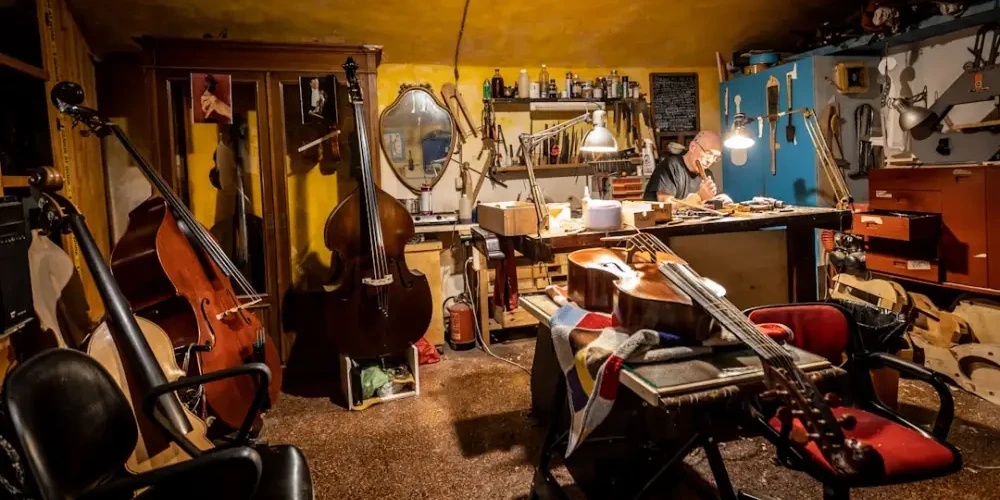
In an age of mass production, choosing handmade art is a powerful way to honor the human touch. Whether it is a piece of bespoke furniture or a hand-etched sculpture, items made by artisans carry an energy that factory-made decor simply cannot replicate. When you select art that highlights craftsmanship, you are making a statement about valuing quality and longevity—values that are often central to a family’s legacy.
Practical Steps to Curating Your Family Narrative
Once you have a sense of your story, it’s time to curate. This process should be slow and intentional. You don’t need to fill every wall in a single weekend. In fact, a collection that grows over time is often more authentic.
- Look for Local Artists: When you travel or move to a new area, seek out local creators. A piece of art purchased in a place that holds significance for your family becomes a permanent souvenir of that chapter of your life.
- Commission Custom Work: If you can’t find a piece that fits your narrative, consider commissioning an artist. This allows you to incorporate specific symbols or materials that are meaningful to your heritage.
- Incorporate ‘Found’ Objects: Art doesn’t have to be a canvas. A framed map of a meaningful city, a piece of driftwood from a favorite beach, or even a preserved recipe in a loved one’s handwriting can serve as powerful narrative art.
Design Tips for Displaying Your Collection
How you display your art is just as important as the pieces themselves. To ensure your home remains cohesive rather than cluttered, follow these practical design principles:
- Use Consistent Framing: If your art pieces are diverse in style (e.g., a mix of photos, sketches, and oil paintings), using a similar frame style or material can provide a sense of unity.
- Vary the Scale: Don’t be afraid to mix large-scale statement pieces with smaller, intimate items. A large landscape can act as a backdrop for a smaller, framed family heirloom.
- Consider Lighting: Proper lighting can elevate a simple piece of art into a focal point. Use picture lights or adjustable ceiling spots to draw attention to the pieces that tell the most important parts of your story.
- Create a Gallery Wall with Purpose: Instead of a random assortment, group items by theme. For instance, dedicate one wall to ‘Travel’ and another to ‘Ancestral Roots.’
Conclusion: A Home That Speaks Your Language
Choosing art that tells your family story is not about following trends; it’s about listening to your own history. It’s about surrounding yourself with objects that spark conversation and provide a sense of belonging. Whether it’s through a piece of finely crafted woodwork that honors your heritage or a contemporary painting that captures your family’s modern spirit, let your walls reflect the unique journey of your life.
At Bottega Michelangeli, we celebrate the intersection of tradition and modern design. We believe that every piece of art and furniture in your home should be a testament to craftsmanship and a reflection of your individual story. Start small, choose with intention, and watch as your home begins to speak your family’s language.
Related Posts

How to use biophilic design to finally make your home feel peaceful
Transform your home into a tranquil…
Why the way we design furniture is finally returning to slow craftsmanship
Explore why interior design is shifting…

How adaptive reuse is actually changing the way we see heritage
Explore how adaptive reuse transforms…