

The Quiet Revolution: Bringing the Outdoors In
In an era defined by digital saturation and rapid urban density, the concept of ‘home’ is undergoing a quiet but profound transformation. It is no longer viewed merely as a shelter or a display of aesthetic status; instead, it is being reclaimed as a sanctuary—a site for psychological restoration. Central to this movement is biophilic design, a methodology that goes beyond the superficial placement of a few potted plants to address our innate, biological need for connection with the natural world.
The term biophilia, popularized by biologist Edward O. Wilson, suggests that humans possess an evolutionary pull toward nature. When we ignore this connection within our living spaces, we often experience a subtle, persistent sense of friction. Conversely, when we integrate natural elements into our interiors, the result is a palpable shift in atmosphere. To truly use biophilic design to make your home feel peaceful, one must look at the home through a lens of sensory experience and heritage craftsmanship.
The Philosophy of Materiality and Form
At its core, biophilic design is about more than just greenery; it is about the honesty of materials. In many modern developments, we are surrounded by synthetic surfaces—laminates, plastics, and cold metals—that offer little tactile or visual stimulation to the human brain. To foster peace, we must turn toward materials that carry the ‘memory’ of the earth.
Wood, particularly when treated with the respect of traditional craftsmanship, is perhaps the most potent tool in the biophilic toolkit. Whether it is a hand-carved dining table or custom cabinetry that retains the natural grain patterns of the timber, these elements provide a visual complexity that mimics the patterns found in forests. This ‘fractal’ geometry—patterns that repeat at different scales—has been scientifically shown to reduce stress levels. In our pursuit of peace, we are not looking for perfection, but for the organic irregularities that remind us of the living world.
The Nuance of Natural Light and Air
Light is the primary architect of mood. To achieve a peaceful home, one must move away from static, harsh overhead lighting and embrace the dynamic qualities of natural illumination. Biophilic design emphasizes the importance of the circadian rhythm—the internal clock that regulates our sleep-wake cycle. By maximizing window exposure and using reflective surfaces to bounce sunlight into deeper corners of a room, we align our indoor lives with the movement of the sun.
Furthermore, the movement of air is a frequently overlooked element of biophilia. A truly peaceful room is never stagnant. The gentle rustle of a linen curtain or the subtle change in temperature from an open window provides a sensory layer that grounds us in the present moment, breaking the sterile monotony of climate-controlled environments.
Practical Steps to Cultivate a Biophilic Sanctuary
Implementing biophilic design does not require a total architectural overhaul. It is achieved through a series of intentional choices that prioritize sensory well-being. Here are several ways to begin the transition:
- Prioritize Tactile Variation: Mix textures such as raw silk, wool, stone, and unfinished wood. These variations encourage ‘tactile exploration,’ which grounds the nervous system.
- Introduce Organic Silhouettes: Replace sharp, aggressive corners with softened, curved edges. In nature, straight lines are rare; furniture that mimics the soft contours of the landscape feels inherently more inviting.
- Incorporate ‘Prospect and Refuge’: Create cozy nooks (refuge) that offer a view out into a larger space or a window (prospect). This spatial configuration satisfies an ancient human desire for both safety and awareness.
- Live with Living Things: While obvious, the placement of plants should be strategic. Group them in clusters to create a ‘micro-ecosystem’ effect rather than scattering them randomly.
- Utilize a Natural Palette: Move beyond stark whites and grays toward ‘earth-born’ tones—ochres, moss greens, and deep terracottas—that evoke a sense of landscape.
The Interplay of Heritage and Nature
At Bottega Michelangeli, we have always believed that true craftsmanship is an extension of the natural world. When a piece of furniture is created with the human touch, it carries an energy that mass-produced items lack. This is a vital component of biophilic design: the human element. Just as a bird’s nest or a beehive is a natural construction, a hand-carved wooden screen or a bespoke cabinet is a manifestation of human nature interacting with raw material.
When we surround ourselves with objects that have a story—items that celebrate heritage and the slow process of creation—we feel a deeper sense of belonging. This sense of belonging is the ultimate precursor to peace. A home filled with soul-less, disposable items will always feel transient. A home filled with natural materials and artisanal heritage feels permanent, rooted, and calm.
Designing for the Long Term
Ultimately, biophilic design is a rejection of the ‘fast interior’ trend. It is an investment in a lifestyle that values longevity and well-being over fleeting aesthetics. By choosing to live among natural textures, soft light, and organic forms, we are making a choice to honor our biological heritage. The result is not just a beautiful house, but a home that actively heals, restores, and provides a much-needed respite from the outside world. In the quiet grain of a wooden table or the shifting shadows of a well-placed fern, we find the peace we have been searching for.
Related Posts
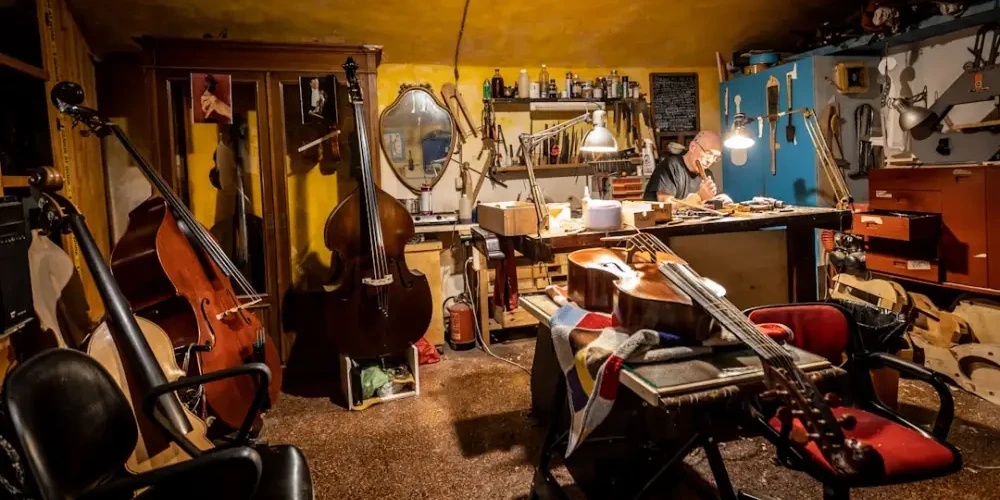
Why the way we design furniture is finally returning to slow craftsmanship
Explore why interior design is shifting…

How to choose art that actually tells your family story
Discover how to select meaningful art…

How adaptive reuse is actually changing the way we see heritage
Explore how adaptive reuse transforms…