
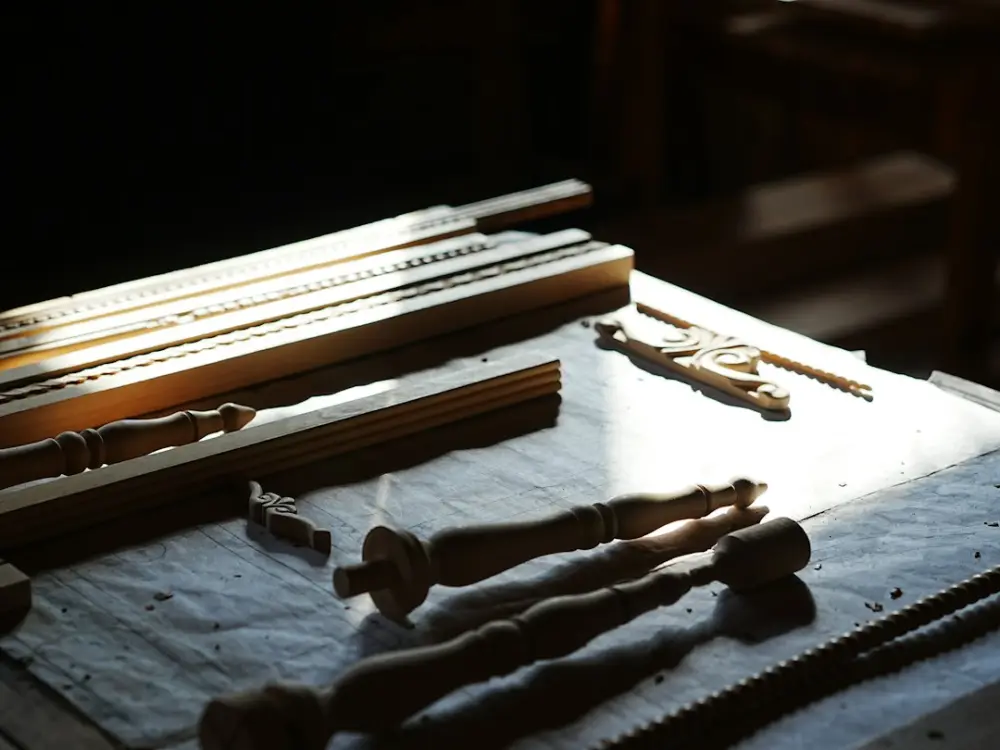
Handmade furniture refers to individual pieces crafted primarily by hand or using hand-operated tools rather than automated assembly lines. This approach prioritizes structural integrity through traditional joinery techniques, high-quality solid woods, and artisan finishes, resulting in durable, unique items designed to last for generations rather than being replaced every few years.
When selecting a piece for the home, the focus shifts from immediate availability to long-term utility. Investing in hand-built items requires a basic understanding of wood behavior, construction methods, and the specific characteristics of different timber species. This knowledge ensures that a chosen table or cabinet remains functional and beautiful through decades of daily use and seasonal climate shifts.
What Defines Authentic Handmade Furniture?
Authenticity in handmade furniture is found in the specific decisions a maker makes during construction. Unlike factory-produced items that rely on high-speed CNC routers and standardized templates, an artisan examines each board for grain direction, moisture content, and aesthetic character. You can often identify these pieces by looking for subtle variations that machines cannot replicate, such as the slight texture left by a hand plane on the underside of a tabletop or the precision of a hand-cut dovetail joint.
In a workshop setting, tools like the block plane, spoke shave, and marking gauge are used to refine surfaces and ensure parts fit together with tight tolerances. For example, a handmade chair leg might have a subtle taper that follows the natural flow of the wood grain, providing both strength and visual harmony. Mass-produced furniture often ignores grain direction to maximize material yield, which can lead to warping or splitting over time. Authentic craftsmanship treats wood as a living material, allowing for the natural expansion and contraction that occurs with changes in humidity.
Another hallmark of the handmade process is the absence of modern fasteners like cam locks or staples. If you look inside a high-quality dresser drawer, you should see mechanical connections rather than plastic brackets or excessive amounts of industrial glue. These traditional methods ensure that the piece remains rigid under weight while still possessing the flexibility to survive 2026 and the many years that follow.
Key Indicators of Superior Wood Joinery
The strength of any furniture piece lies in its joinery. Superior joinery relies on wood-to-wood contact, creating a mechanical bond that is often stronger than the wood itself. The most common indicator of quality is the mortise and tenon joint, where a protruding "tenon" on one piece fits into a corresponding hole or "mortise" on another. In a dining table, a pinned mortise and tenon—where a small wooden dowel is driven through the joint—is a sign of exceptional durability.
Dovetail joints are the standard for drawer construction. While many factory pieces use "machine dovetails" that are perfectly uniform, hand-cut dovetails often feature thinner "pins" and wider "tails," a layout that is difficult for automated machinery to achieve. This specific geometry prevents the drawer front from pulling away from the sides, even after decades of heavy use. Understanding the way we design furniture is essential to recognizing why these labor-intensive joints are superior to simple butt joints reinforced with nails.
When inspecting a piece, check the "piston fit" of the drawers. A well-made handmade drawer should slide in and out smoothly on wooden runners without the need for metal ball-bearing slides. This requires extreme precision in squareness and tolerances, something only achievable through careful hand-fitting. If a drawer wobbles significantly or sticks when pushed from one side, it likely lacks the structural integrity required for a legacy piece of furniture.
Selecting the Best Wood Species for Durability
Not all solid wood is created equal. The choice of species dictates how well a piece will withstand scratches, dents, and environmental stress. Hardwoods, derived from deciduous trees, are generally preferred for furniture due to their density. Oak, Walnut, and Cherry are staples of the craft for good reason. White Oak, for instance, is highly resistant to rot and decay because of its closed-cell structure (tyloses), making it ideal for heavy-use items like dining tables or entryway benches.
Walnut is prized for its stability and rich, dark tones. It has a relatively low shrinkage rate, meaning it is less likely to develop gaps in the joinery over time. For those seeking a lighter aesthetic, Hard Maple offers incredible dent resistance, though its density makes it more challenging to work by hand. On the other hand, softwoods like Pine or Cedar are often used for rustic styles but are much more prone to bruising. If you are choosing a piece for a high-traffic family room, a dense hardwood with a high rating on the Janka hardness scale is the more practical investment.
Consider also how the wood was sawn. Quartersawn timber, which is cut at a 90-degree angle to the growth rings, is significantly more stable than plainsawn wood. It expands and contracts less across its width, which is critical for large surfaces like tabletops or wide cabinet panels. While more expensive due to the higher waste involved in the milling process, quartersawn wood prevents the "cupping" or bowing that often ruins mass-market furniture.
How to Evaluate Surface Finishes and Textures
The finish of a piece of furniture serves two purposes: protection and tactile appeal. In mass production, pieces are often sprayed with thick, plastic-like lacquers that sit on top of the wood. While durable in the short term, these finishes can crack and are nearly impossible to repair without stripping the entire piece. Handmade furniture typically utilizes penetrating finishes like tung oil, linseed oil, or hardwax oils.
These oils soak into the wood fibers, hardening them from within while leaving the natural texture of the grain accessible to the touch. A hand-rubbed finish allows the wood to age gracefully, developing a patina over time. If a surface finished with oil gets scratched, it can often be repaired by simply applying a small amount of fresh oil to the affected area. This maintainability is a key reason why we still value the human touch in modern interiors; it creates a living surface rather than a sterile, sealed one.
When evaluating a finish, run your hand across the surface. It should feel smooth but not like glass; you should be able to sense the organic variations in the wood. Check the "end grain" (the parts where the wood was cut across the growth rings, such as the ends of a tabletop). If the end grain is much darker or rougher than the rest of the piece, it indicates that the maker did not spend enough time sanding and sealing those thirsty fibers. A master craftsman treats every surface, including the ones you cannot see, with the same level of attention.
Managing Your Furniture Shortlist and Digital Selections
Selecting handmade furniture often involves a slower procurement process than buying from a big-box retailer. Because these items are often made to order or produced in small batches, managing your shortlist requires attention to detail regarding lead times and customization options. When browsing digital galleries or artisan portfolios, look for high-resolution images of the joinery and the underside of the pieces. A transparent maker will be happy to show the "bones" of their work.
It is helpful to maintain a list of specific requirements: maximum dimensions, preferred wood species, and the intended light exposure of the room. Since natural wood changes color when exposed to UV light—Cherry darkens into a deep red, while Walnut tends to lighten—knowing the orientation of your windows is vital. Many independent makers offer wood samples; always request these before finalizing a selection to see how the grain and finish appear under your specific home lighting (e.g., warm LEDs vs. natural northern light).
Communication is the final step in managing a digital selection. Unlike a standard checkout process, purchasing handmade work often involves a direct dialogue with the workshop. Ask about the moisture content of the wood used and whether they use kiln-dried or air-dried lumber. This ensures the piece is acclimated to a domestic environment and won't develop structural issues once it moves from a humid workshop to a climate-controlled home.
Five handmade furniture qualities to compare first
- Solid wood versus veneer at stress points such as seat rails and drawer fronts.
- Joinery you can see or feel: dovetails, mortise-and-tenon, or dowels instead of staples alone.
- Finish consistency inside drawers and on hidden faces, not only showroom surfaces.
- Hardware weight and alignment on doors, hinges, and extension slides.
- Maker documentation: wood species, care instructions, and repair options.
Use this short list when you shop so list-style comparisons stay separate from the deeper how-to sections above.
Wood characteristics at a glance
- Hard maple: tight grain, resists dents, pale tone that accepts light stains.
- White oak: strong open grain, good for outdoor-ready pieces when sealed.
- Walnut: rich color, softer than oak, shows fine tooling marks.
- Cherry: darkens with light exposure; pair with low-VOC finishes.
- Reclaimed boards: check for hidden nails, moisture history, and insect damage.
Why Artisan Craftsmanship Outlasts Mass Production
The longevity of artisan furniture is not accidental; it is the result of engineering for repairability. Mass-produced furniture is often made from MDF or particle board with a thin veneer. Once the edges of these materials get wet or the veneer chips, the piece is effectively ruined because the substrate cannot be sanded or refinished. Solid wood furniture, however, can be planed down, re-glued, and refinished indefinitely.
Artisan pieces also hold their value better than their industrial counterparts. A hand-built table is an asset that can be passed down or even sold on the secondary market as a piece of functional art. The structural integrity provided by traditional joints means the piece won't become "wobbly" after a few years of use. In a world where many household items are designed for the landfill, choosing handmade is a practical move toward a more sustainable and less wasteful home environment.
At Bottega Michelangeli, the focus remains on this intersection of heritage techniques and functional design. By choosing furniture that prioritizes the integrity of the material and the skill of the maker, you are not just buying a utility; you are bringing a piece of history and human intent into your living space. This commitment to craftsmanship ensures that every selection supports a tradition of excellence that transcends temporary trends, providing a foundation for thoughtful interiors that endure for years to come.